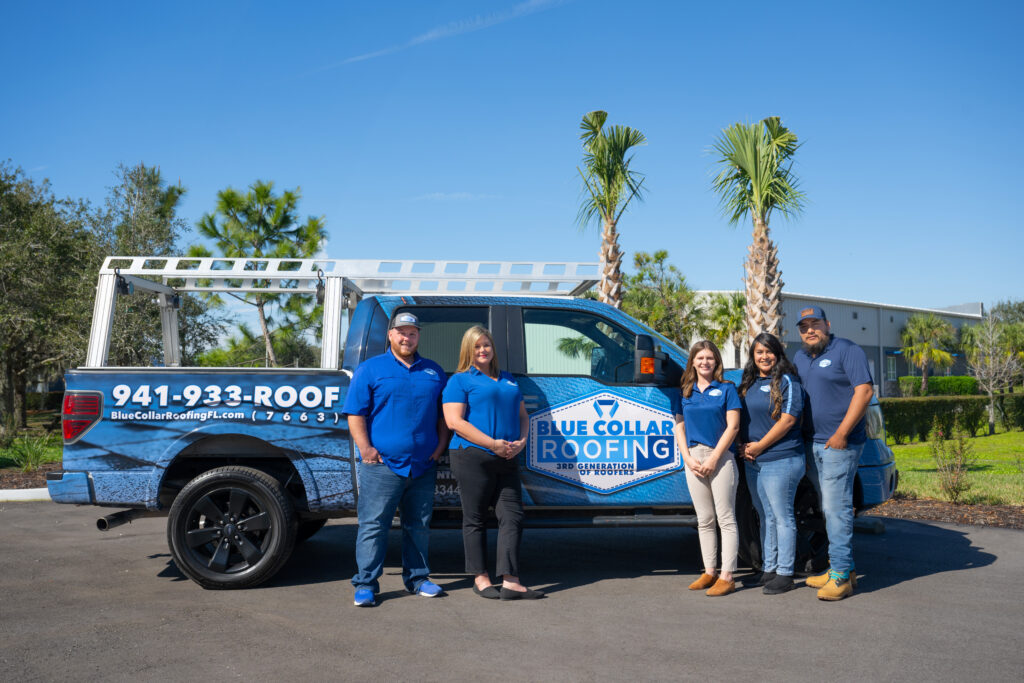
Lakewood Ranch sits in one of the most demanding roofing climates in the country. Sun exposure is relentless, afternoon storms roll through for months at a time, and humidity settles into every seam of a roof assembly. Add the architectural standards many village associations enforce, and you get a community where roofing work has to be done with a specific set of skills and a healthy respect for the rules. Blue Collar Roofing is a family-owned contractor serving Bradenton, Sarasota, and the surrounding Florida Gulf Coast communities, and Lakewood Ranch is one of the areas we know best.
This page covers what homeowners and commercial property owners in the area deal with, the repair and replacement services available, how storm damage gets handled, and what to look for when hiring a Lakewood Ranch roofing contractor.
Why Lakewood Ranch Roofs Need Specialized Attention
The housing stock here leans heavily toward tile roofs. Concrete and clay tile cover a large share of the homes in Lakewood Ranch, and that choice of material shapes everything about how a roof gets maintained. Tile is durable and holds up well against sun and rain, but it is also heavy, brittle underfoot, and unforgiving of sloppy installation. A cracked tile or a slipped field tile can open a path for water that does not show up as a leak until the underlayment and decking have already taken on moisture.
Tile roofs also depend on the layers beneath them. Underlayment, flashing, valleys, and fasteners do the actual waterproofing work, while the tile sheds the bulk of the water and provides the look. When an inspection only checks for broken tiles on the surface, the real problems can go unnoticed for years.
Many Lakewood Ranch neighborhoods are governed by homeowner associations with architectural review requirements. Roof color, tile profile, and material often have to match the rest of the street or meet written community standards before work begins. A contractor who has worked in the area understands that paperwork is part of the job.
Roof Repair Services in Lakewood Ranch
Not every roofing problem calls for a full replacement, and a good contractor will tell you when a targeted repair is the right call. Repairs we handle include:
- Cracked, broken, or slipped tile replacement on concrete and clay tile roofs
- Active leak diagnosis and repair at valleys, penetrations, and roof-to-wall junctions
- Flashing repair and replacement around chimneys, vents, and skylights
- Shingle repair for lifted, torn, or missing tabs after high wind
- Flat and low-slope repair including seams, blisters, and ponding areas
- Fascia, soffit, and roof edge repairs where water has caused deterioration
- Gutter and drainage corrections that keep water moving away from the roof
Leak chasing is where experience pays off. Water rarely enters a home directly below the visible damage. It travels along decking, framing, and insulation before it finds a place to drip through a ceiling. Finding the actual entry point means inspecting the whole roof system rather than patching the first suspicious spot.
Tile Roof Repair and Replacement
Concrete and clay tile can often be repaired tile by tile when the underlayment is still sound. Once the underlayment has aged out, replacing individual tiles will not stop the leaks, and the better long-term answer is a full tile replacement that includes new underlayment, new flashing, and proper fastening. Matching existing tile is sometimes possible and sometimes not, which is one more reason to check with your association before ordering materials.
Shingle Roof Repair
Asphalt shingle roofs are common across Southwest Florida and generally the most straightforward to repair. Wind-driven rain and tropical systems can lift or tear shingles, and a fast repair prevents the decking underneath from getting soaked. If shingles are curling, granule loss is heavy, or the roof is past its expected service life, replacement usually makes more financial sense than repeated patching.
Full Roof Replacement and Reroofing
Replacement is a bigger project with more decisions attached. The process typically includes a thorough inspection, a written scope of work, material selection, permitting, tear-off, decking evaluation and repair, underlayment installation, new roofing material, flashing, ventilation, and final cleanup with magnetic sweeping for nails.
Ventilation deserves more attention than it usually gets. Florida attics get brutally hot, and poor intake or exhaust ventilation shortens the life of the roofing material from underneath while pushing cooling costs up. A replacement is the natural time to correct ventilation problems, because the roof is already open.
Blue Collar Roofing installs and works with a range of systems, including tile, shingle, metal, stone coated steel, and flat or low-slope assemblies. The right choice depends on the home’s structure, the community’s design standards, the budget, and how long the owner plans to stay in the home.
HOA Requirements and Lakewood Ranch Roofing
Many villages in Lakewood Ranch require architectural review before roofing work starts. That usually means submitting the proposed material, color, and profile for approval and waiting for a decision before scheduling installation. Skipping that step can create real problems later, sometimes including a requirement to redo work at the owner’s expense.
Confirm your specific community’s rules with your association, since requirements vary from village to village and can change over time. A contractor who asks about HOA approval early in the conversation is a contractor who has done this before.
Storm Damage and Emergency Roof Help
Southwest Florida roofing problems often arrive all at once. High winds strip shingles and ridge caps, blow tiles loose, and tear at flashing. Heavy rain then finds every weakness. After a storm passes, the priorities are straightforward:
- Get the roof looked at quickly so the damage is documented before it gets worse.
- Stop water from getting into the home with temporary protection where needed.
- Photograph and document everything for the insurance claim.
- Schedule permanent repairs once the scope is clear.
Temporary measures like tarps and emergency patching buy time, but they are not a fix. The sooner the permanent repair is scoped, the less chance there is for secondary damage to drywall, insulation, and framing. For questions about what your policy covers, work directly with your insurance carrier or a licensed public adjuster, since coverage terms vary by policy.
Roof Inspections and Maintenance Programs
Most roof failures give warning signs long before they become interior leaks. A routine inspection catches the small things: cracked tiles, worn pipe boots, deteriorated sealant, clogged valleys, loose fasteners, and flashing that has pulled away from the wall.
A maintenance program turns those findings into scheduled work instead of emergency calls. For tile roofs in particular, periodic inspections extend the life of the underlayment by catching water intrusion early. Inspections are also useful before buying or selling a home, after a major storm, and any time you notice a stain on a ceiling, granules in the gutters, or daylight showing through the attic.
Commercial Roofing for Lakewood Ranch Properties
Lakewood Ranch commercial and mixed-use properties have different roofing needs. Flat and low-slope systems dominate, and leaks in those assemblies tend to spread sideways across the deck before showing up inside. Blue Collar Roofing handles commercial roofing across TPO, metal, tile, shingle, flat and low-slope systems, and stone coated steel, including repairs, replacements, and scheduled maintenance that keeps a building dry without disrupting the businesses inside.
How to Choose a Lakewood Ranch Roofing Contractor
Roofing is a local business, and the difference between a good outcome and a bad one usually comes down to who is standing on the roof. A few things to verify before signing anything:
- Licensing and insurance are current and can be produced on request
- The written estimate breaks down materials, labor, and what is excluded
- Permits and HOA approval are addressed in the plan, not left to the homeowner
- The scope explains how decking damage discovered during tear-off will be handled
- Warranty terms on both materials and workmanship are provided in writing
- You can speak with someone local who will still be there after the job is done
Blue Collar Roofing is family-owned and works primarily in Manatee, Sarasota, and Charlotte Counties. That means the person who inspects your roof is likely to be the same person you can call in a year if you have a question. If you are weighing a repair against a replacement, ask for both options in writing so you can compare them honestly rather than being pushed toward the bigger job.
Roofing work in Lakewood Ranch rewards patience and local knowledge. Tile systems, storm exposure, and community review requirements all shape what a good roof looks like here. Getting an inspection early, keeping documentation, and choosing a contractor who explains the reasoning behind each recommendation will keep your home protected through many storm seasons to come.
Frequently Asked Questions
How do I know if my Lakewood Ranch roof needs repair or replacement?
It depends on the age of the underlayment, the extent of the damage, and whether leaks have reached the decking. A few cracked tiles or lifted shingles are usually repairable. Widespread underlayment failure, repeated leaks, or a roof near the end of its service life generally points toward replacement. An inspection gives you the facts to decide.
Does Blue Collar Roofing work with Lakewood Ranch HOAs?
Yes. Many villages in the area require architectural approval before roofing work begins, and that approval often covers material, color, and tile profile. We factor that step into the project schedule and recommend confirming your specific community’s current requirements with your association, since rules vary from village to village.
Can you repair a tile roof without replacing the whole roof?
Often, yes. Concrete and clay tile can be replaced section by section when the underlayment underneath is still in good condition. If the underlayment has aged out, tile repairs alone will not stop water intrusion, and a full replacement with new underlayment and flashing is the more reliable long-term solution.
What should I do right after storm damage to my roof?
Stay off the roof and document what you can see from the ground. Call a roofing contractor for an inspection, arrange temporary protection if water is getting in, and photograph any interior damage. Report the claim to your insurance carrier promptly. Coverage questions should go directly to your carrier, since policy terms differ.
How often should a Florida roof be inspected?
An annual inspection is a practical baseline in this climate, with an additional check after any major storm. Tile roofs especially benefit from regular inspections because the underlayment is what actually keeps water out, and problems there are invisible from the ground until they show up as a ceiling stain.